
A tiled surface in need of renovation can be a very sorry sight. It may have fallen into neglect, been cleaned with incorrect products, be lacking a protective sealer or maybe it’s been buried under a carpet for a decade or more. But, in most cases, a tiled surface can be completely transformed, eliminating the need for costly replacement – and it’s generally a lot easier than you think.
Most issues are the result of residue and this can be caused by a variety of things. The most common is organic dirt, but there can also be residues of grout post installation, of rust, limescale or wax, or a film left by unsuitable cleaning products. A build-up will, in turn, create a key onto which more residue will build up. On a ceramic or porcelain tile, or a stone tile that’s been correctly sealed, this will affect surface appearance and a tile’s slip resistance properties; this is especially common in textured tiles where residue can accumulate in the tile’s high-low surfaces. In some cases, a tile may look okay but the surface aesthetic may be ruined by a discoloured grout. Whether across the face of the tile or within the grout joint, this residue will make tiles more difficult to clean, compounding the problem. In the case of a natural stone tile that hasn’t been correctly sealed, staining can also occur.
What not to do
It’s at this stage that things can often get worse. There are many different ‘heavy duty’ products and tools on the market that are recommended for deep cleaning. Many solutions contain harsh chemicals which can damage natural stone and erode a cementitious grout joint. Home-made hacks, using baking soda and vinegar, can be equally damaging, as can using steam cleaners. Specialist cleaners, on the other hand, are formulated to react with residue and enable safe removal.
As a rule of thumb, a specialist alkali cleaner should be used to remove organic dirt caused by food and drink, foot traffic, mould and mildew, soap scum, etc.
A specialist acid-based cleaner should be used to remove grout residues and limescale. However, harsh acidic solutions should not be used, especially when cleaning natural stone. Specialist non-corrosive treatments that have an acid-replacement formulation, like LTP Cement Grout & Residue Remover, are safe to use on all types of unpolished natural stone.
How to safely renovate tiles
Removing organic residue:
Our specialist alkali-based cleaner, LTP Grimex, can be used for routine and deep cleaning of ceramic, porcelain and natural stone, with the dilution ratio and method adjusted to suit. Tiles should be wiped or swept/vacuumed before cleaning to remove loose dust and dirt.
To deep clean, dilute one part of LTP Grimex in 3 parts warm water. Apply liberally, spreading over the surface of the tiles. If necessary, agitate with a scrubbing brush. Leave to react for 5-10 minutes, keeping the surface wet with additional solution. Agitate the surface again, mop up and rinse thoroughly with clean water.
Removing grout residue and limescale:
As mentioned above, acid-replacement formulations, like LTP Cement, Grout & Salt Residue Remover, are safe to use on all types of ceramic, porcelain and unpolished natural stone.
Apply LTP Cement, Grout & Salt Residue Remover undiluted and agitate immediately with an emulsifying pad. Rinse thoroughly with clean, fresh water then extract the released calcium deposits with a sponge. Rinse with water and leave to dry. Repeat the process until the lighter marks have been removed.
N.B. Shake the container well before use and wear gloves. Always dilute by adding product to water, rather than water to product – and always rinse surfaces thoroughly with cool, clean water. When treating vertical surfaces, start at the top and work down.
Removing other types of stains from natural stone and porcelain
Whilst organic dirt and building matter are the most common causes of stubborn residue, stains can also be caused by other matter, including rust, rising salts, paint and wax. The LTP range includes a variety of specialist treatments that will safely remove these stains, as shown here.
Renovating grout joints
To remove staining from grout lines, we recommend LTP Mouldex Grout Cleaner – a trigger spray treatment that has a bleaching action which cleans grout and silicone seals and helps prevent future staining. LTP Mouldex can safely be used in all tile installations.
LTP Mouldex is sprayed onto stained areas 5-10 cm from the surface. After around 45 minutes, a little water is applied and the surface is agitated with a stiff brush to release the dirt and grime; an old toothbrush is ideal for narrow joints and tight spaces. Tiles should then be rinsed, using a sponge and water.
Top Tip! If staining is particularly severe, the treatment can be left overnight. On walls, cling film can be applied over the treated area; this will help keep the solution in place and will prevent it from drying out.
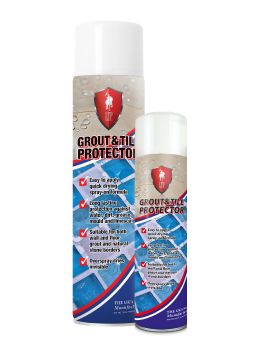
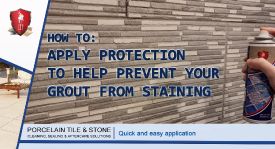
Once treated, grout lines can be protected from future staining with LTP Grout & Tile Protector.
Adding protection to tiles after a deep clean
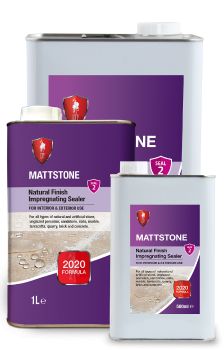
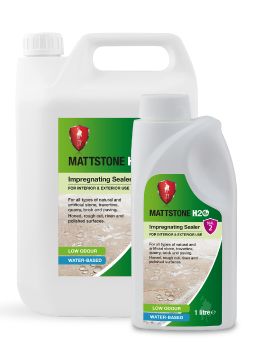
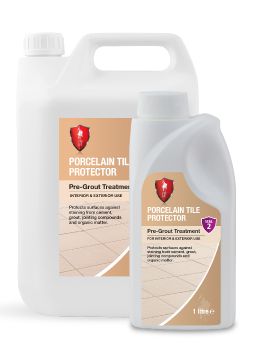
Once heavily soiled tiles have been thoroughly cleaned, they will need to be protected against staining. This will also make ongoing maintenance easier. We recommend LTP Mattstone H2O or Mattstone for natural stone and barrier treatment, LTP Porcelain Tile Protector for matt porcelain pavers.
Ongoing maintenance
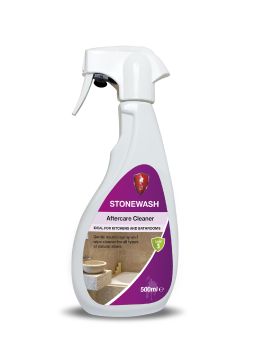
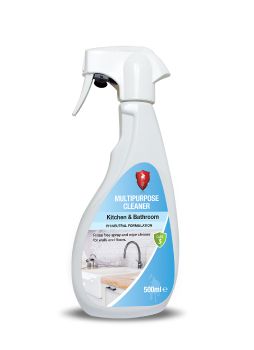
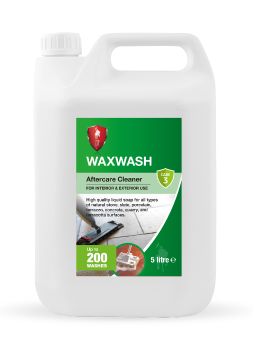
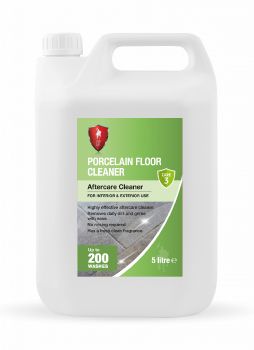
Once the deep cleaning’s done, we recommend LTP Stonewash or LTP Multipurpose Cleaner for the daily cleaning of wall tiles. Both are pH neutral rinse-free trigger spray cleaners, so safe to use on all surfaces. For floors, we recommend LTP Waxwash; this cleaner contains a trace of linseed oil and can be used on the most delicate of surfaces, as well as ceramic and porcelain surfaces Or, for engineered tiles specifically, LTP Porcelain Floor Cleaner. High traffic areas will benefit from a mop/wet clean once a week, to keep on top of residue.
For further information, please contact LTP on tel. 01823 666213 or email [email protected]. Also, for online help on-the-go, visit LTP TV on YouTube and Product Selector at https://ltp-productguide.co.uk


