
Following June’s record-breaking heatwave, and with another one on the way, households are being advised to cut down on water usage. Hosepipe bans are being introduced in parts of the UK and this looks set to increase. This can make outdoor jobs more difficult, especially watering, but in the case of patio cleaning, it shouldn’t hamper progress. In fact, a mop and bucket – and the correct cleaner – will do a far better job than a blast of water.
Why a mop and bucket is better
Jet washing may seem like the best method for a fast clean but it will only wash dirt off the surface of the slabs. High-pressure water will also damage grout joints. A specialist treatment, on the other hand, will react with ingrained residue and organic matter, drawing it out of the stone’s porosity. It will also help to prevent the regrowth of algae and other organic material.
The mop-and-bucket approach is one that’s very much routine in other countries. Patios are mopped in the same way as indoor floors, on a regular basis. This makes ongoing maintenance far easier. Regular cleaning of inside-to-outside surfaces, like those that run through bifold doors, also helps maintain a seamless aesthetic.
What to put in the bucket
To properly remove stains and ingrained dirt, we recommend a thorough wash with deep cleaner and stain remover, LTP Grimex. Before cleaning, remove furniture, pots and other objects, and sweep the slabs to remove any leaves and residue. Then, test the cleaning solution on an inconspicuous area.
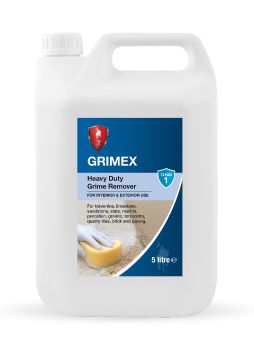
How to apply LTP Grimex:
To remove mild staining, dilute one part of Grimex with 10 parts of warm water. Mop the surface and rinse with clean water. For more severe staining, dilute one part of Grimex with 3 parts of warm water. Agitate with a scrubbing brush and leave to act for 5-10 minutes, adding more solution to keep the surface wet. Sweep up any residue and rinse thoroughly with clean water. Once stubborn staining has been removed, a regular clean will keep the surface looking its best.
Dealing with slippery paving slabs
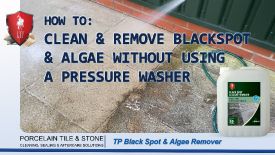
If your patio is prone to slippery black spot, lichen, moss and algae, it will benefit from a targeted treatment with LTP Blackspot & Algae Remover. This solution is designed to break down microspores and black spot ‘hyphae’ before they colonise and it’s acid-free, so it’s safe to use on acid-sensitive stone. However, it does contain a bleaching action to remove stains, so test first on an inconspicuous area. Here’s a demo showing how to treat problem areas.
Oil & Grease – and protecting for the future
If you regularly cook outside, and your pavers have become stained with oil and grease, you’ll find plenty of advice in our blog – Removing Oil & Grease from Paving Slabs.
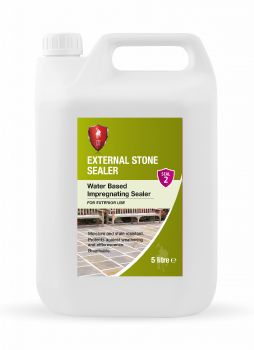
If your patio hasn’t been sealed, consider applying a protective treatment once the surface has been deep cleaned. We recommend LTP External Stone Sealer or Paving, masonry and patio sealer for natural stone and LTP Porcelain Tile Protector or Porcelain Paving Enhancer for matt porcelain pavers. Both treatments are non-film-forming and will help prevent the absorption of moisture and organic particles, reducing staining and the spread of algae, mould and black spot. The result is normally a surface that is easier to keep clean.
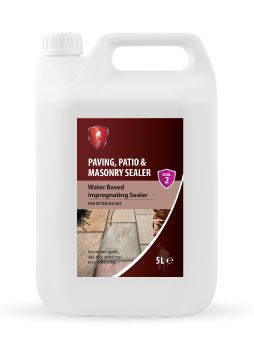
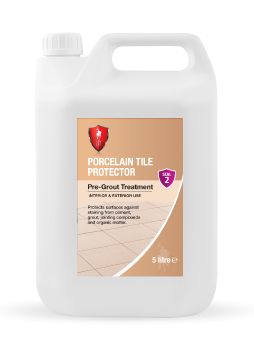
During cleaning and the application of protective treatments, pets and children should be kept off the surfaces until the pavers are dry. To find out more about patio maintenance, please visit http://www.ltp-online.co.uk. For further information, please contact LTP on tel. 01823 666213 or email [email protected]


