
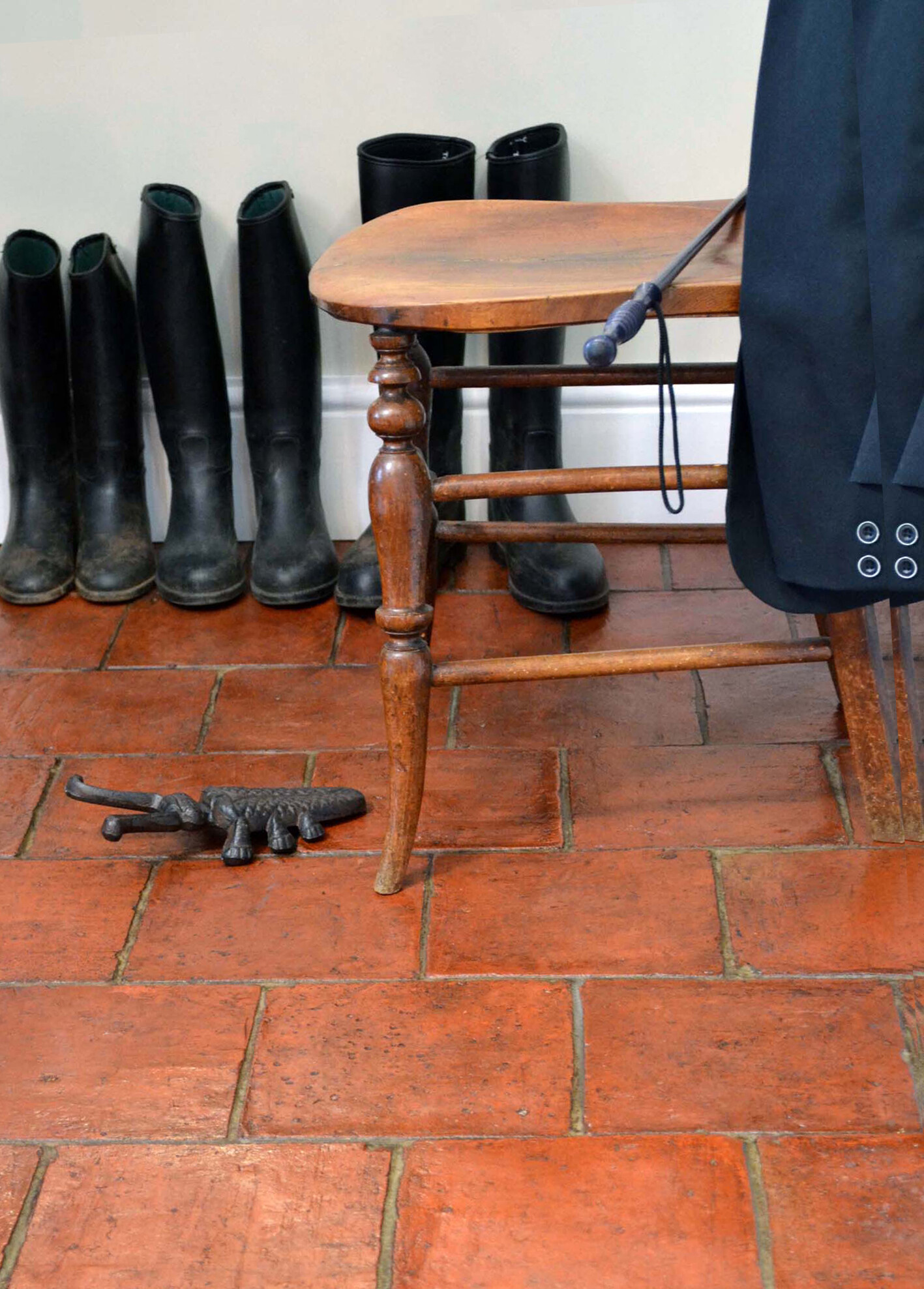
Terracotta tiles are pretty robust things but, like all natural surfaces, they’ll generally benefit from a degree of renovation over the longer-term. How often this is needed will largely depend on the maintenance regime that’s been employed and the degree of wear and tear. Tiles might just require a thorough clean and replenish, but others might need more intensive refurbishment.
It’s fairly easy to tell when intervention is required. The terracotta may have lost its lustre or be more difficult to keep clean, due to a build-up of residue. Tiles may become more easily stained, due to loss of protection, maintenance with unsuitable cleaning solutions or absence of a suitable sealer in the first place. Tiles may scratch more easily and, in the case of older tiles, moisture patches, powdery residue and ‘spalling’ or flaking of the surface might be apparent. In each case, appearance can be easily restored, using the correct products and methods.
A deep clean
Before any protection is added back in, tiles should be swept and then deep cleaned to remove dirt residue, fixing residue (from the original installation or repairs), old wax and worn synthetic sealer. This should be carried out with a suitable alkali intensive cleaner, like LTP Grimex, which can be diluted to either deep clean or effectively strip the surface of the terracotta and remove residue trapped in the tile’s porosity.
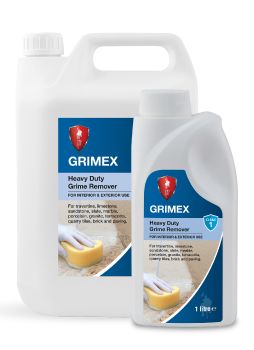
LTP Grimex should be applied to the tiles using an emulsifying pad and left to dwell on the surface for 10-15 minutes. You’ll then need to work the solution into the tiles; a pad-on-a-pole will save your knees here! Tiles should then be rinsed with clean water and a sponge, before applying a sealer.
NB. When cleaning, it’s worth using a hand-held emulsifying pad by the skirting boards, to avoid knocking and damaging the paint work, and then swapping for a pad-on-a-pole for the remainder of the tiled surface. Also, mask any painted surfaces or bare wood to protect them.
Repairs before sealing
Before tiles are resealed, any cracks should be repaired and missing grout replaced. Salt pops and lime pops can also be removed at this stage:
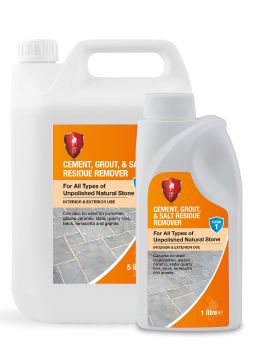
Salt pops are generally caused by efflorescence and the rising salts that leave white deposits on the tile surface. These can be treated with salt residue remover. Make sure any treatment used is safe for application onto terracotta. Some, like LTP Cement, Grout & Salt Residue Remover, will also remove any cement or grout residue left behind from the original installation or repairs before sealing. The Remover is diluted with water 1:1, agitated with a nylon scrubber/scrubbing brush and left to react for 5-10 minutes. Additional solution may need to be applied during this time, so that the surface doesn’t dry out. Any residue should then be removed and the surface rinsed with clean water.
Lime pops – an unusual but natural occurrence – are caused by lime deposits within the unrefined clay. When the tiles are fired, the deposits shrink and leave a void within the structure of the tile. This leaves a thin veneer over the lime pop and, if the veneer wears away, it can become visible.
Limes pops can be physically removed using an electric drill and masonry drill bit. A hole should be drilled so that it’s slightly wider and deeper than the pop. A paste made from a mixture of 20g of resin, 10g of hardener and 40g of ground terracotta should then be used to fill the hole and the edges feathered out with a small wooden spatula. The paste should be left overnight to dry before any sealer is applied. You’ll find a video on our YouTube Channel that demonstrates this process.
Restoring a tile’s protection
Once the terracotta has been deep cleaned – and any repairs carried out and tiles cleaned – you can either use the traditional method to reseal tiles, or the synthetic method.
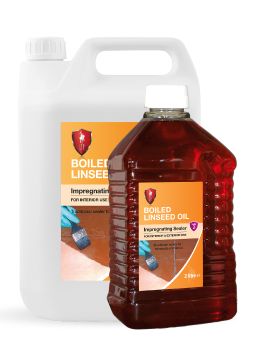
Traditional treatmentIf tiles have been stripped, we recommend a top up coat of LTP Boiled Linseed Oil to protect the terracotta and enhance durability. Apply with a brush and check after 3-4 to see if the oil is fully absorbed, then wipe-up any excess. Dispose of cloths carefully. Tiles should then be left to dry for at least 24 hours before finishing the surface.
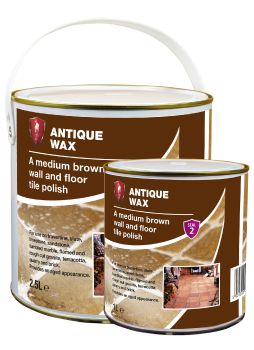
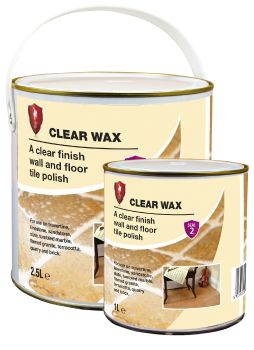
Once the tiles have been oiled, wax is applied. If tiles haven’t been stripped and are relatively new, you can skip straight onto this stage. Here, we recommend LTP Antique Wax or Clear Wax which will provide protection against water, dust and dirt, and create a soft sheen. Wax is generally applied with a cloth and tiles are buffed with a scrubbing brush or a mechanical buffing machine with a brush attachment after about 15 minutes.
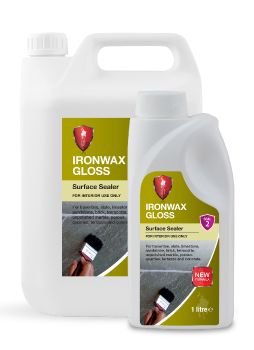
To reinforce an antique look, and make ongoing maintenance easier, a finishing coat of wax protector like LTP Ironwax Gloss can also be applied as a final stage.
Synthetic treatment
Protection can also be restored using a synthetic treatment, in the form of a spirit-based or water-based impregnator, followed by an acrylic wax. This is generally faster to apply but the finish will be lighter and more contemporary.
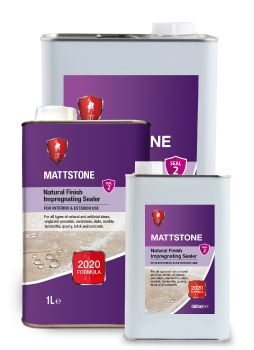
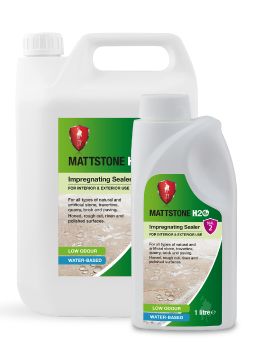
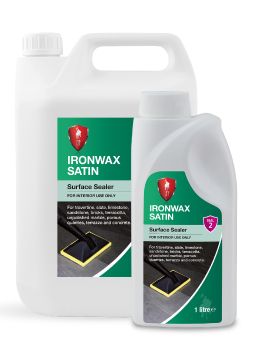
Impregnating sealers are generally applied to stripped tiles using a paint brush; we recommend LTP Mattstone or Mattstone H20. The first coat is normally left longer to cure (sometimes over-night), as it provides a base layer within the terracotta to apply further coats of protection at two-hourly intervals until the tile is fully saturated. LTP Ironwax Satin or Ironwax Gloss is then applied with a clean paintbrush; three coats are generally sufficient – with an hour between each application – but a higher sheen can be created with additional coats, up to a maximum of six.
Ongoing maintenance
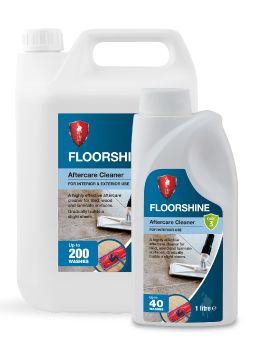
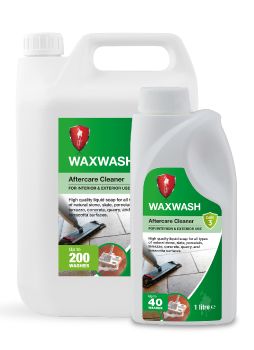
Going forward, tiles should be maintained with a suitable pH-neutral cleaner, like LTP Floorshine. If a finishing coat of wax protector hasn’t been applied, consider using a LTP Waxwash which contains a trace of linseed oil to top up the protection.
To find out more about protection and maintenance, please visit https://www.ltp-online.co.uk or contact the LTP team on tel. 01823 666213 and email [email protected]. Also, for online help on-the-go, visit LTP TV on YouTube and Product Selector at https://ltp-productguide.co.uk


