
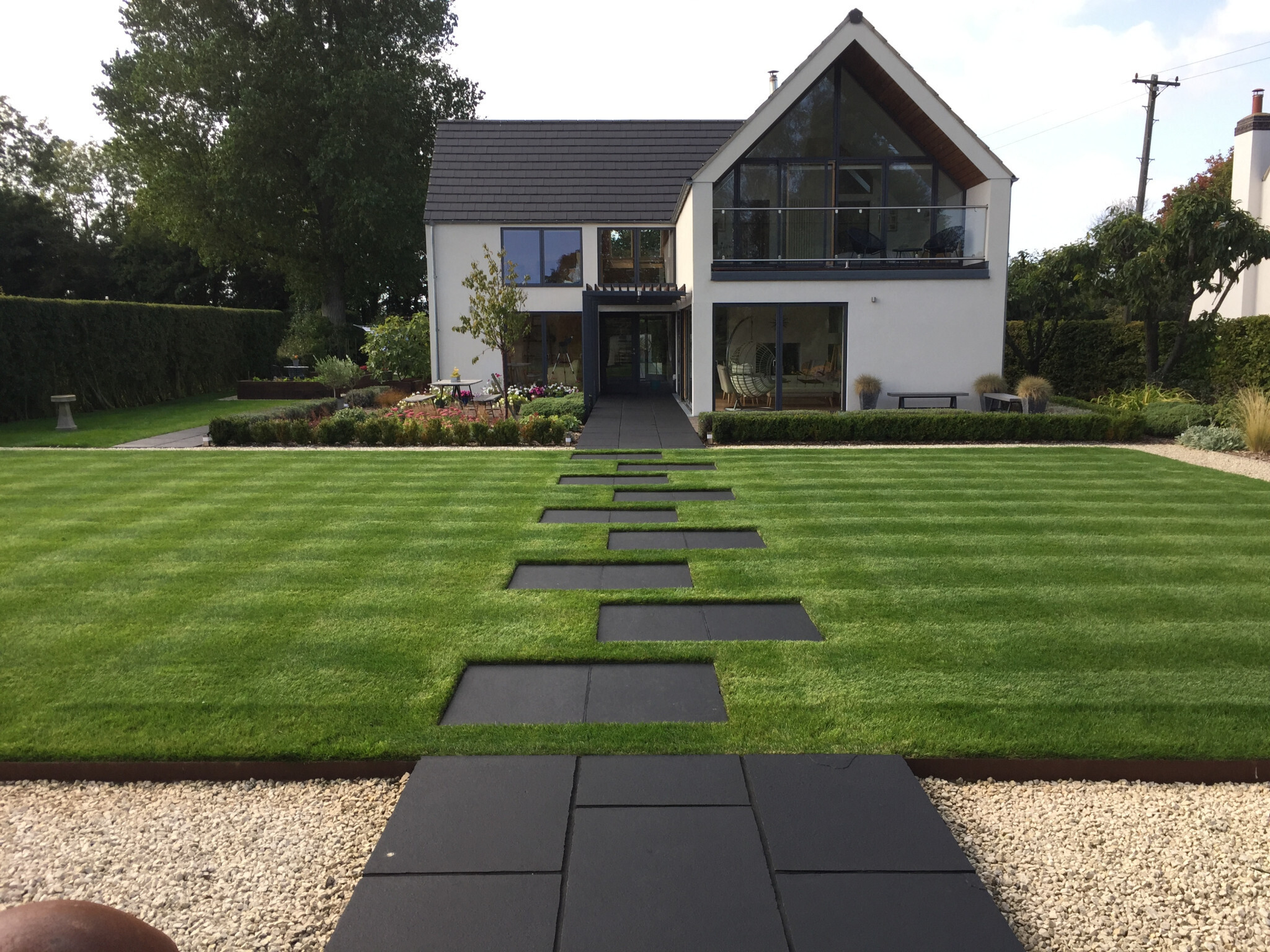
Pavers restored with LTP Blackstone Sealer & Restorer
A newly laid black limestone patio is an impressive sight but, unfortunately, the initial wow-factor often doesn’t last long. Black or very dark grey stone quickly fades and you’re left with a wishy-washy grey aesthetic. So, why does this happen and can anything be done to restore colour and avoid the process repeating?
A combination of UV light and normal rainfall cause this fade-to-grey. Limestone and many other dark stones are calcium-based, alkaline in nature and sensitive to acid. They contain a soluble mineral called pyrite; when this is combined with water and oxygen, it forms sulphuric acid, which dissolves the calcium and changes the colour of the stone. Meanwhile, as rain falls, it absorbs carbon dioxide from the air, which dissolves to form carbonic acid. This makes it slightly acidic – around 5.6 on the pH scale, rather than a neutral value of pH 7. Rainwater, humidity and UV-rays all contribute to the discolouration, as does erosion caused by the wind and general wear and tear. Acidic maintenance chemicals can also cause additional damage, as can jet washing.
How to protect new slabs – and restore an existing patio
Good quality water-resistant sealers go a long way in reducing discolouration – and many can enhance colour too – but rainfall also damages the protection that they create. Topical sealers can be worn away and rainwater that seeps into the stone’s porosity will eventually compromise the effectiveness of an impregnator. For a long-term solution – which protects the stone and its colour – we recommend LTP Blackstone Sealer & Restorer. A water-based, impregnating sealer, Blackstone contains a permanent colour intensifying pigment. To maintain a very dark, pristine finish, annual treatment is recommended, although a treated stone will maintain a far darker aesthetic than an untreated stone for around 4-5 years.
Why good preparation is key
It’s very important to ensure that surfaces are properly cleaned and prepared before applying a restorative treatment, like LTP Blackstone Sealer & Restorer. Any solution applied will mix with residue and loose limestone particles; this can be caused by etching when the stone comes into contact with acidic rain. The etching will create a sediment which will be carried into newly exposed capillaries and the sealer, in turn, will draw the sediment out of open pores. When this residue mixes with the sealer, it will create a smeared and patchy appearance. If you rub your hand across the surface before cleaning, you’ll see a dusty residue; that’s the limestone sediment. Cleaning the surface opens the pores and removes the sediment. We recommend our LTP Grimex for a thorough conditioning clean and LTP Blackspot & Algae Remover for areas that are stained with blackspot, algae and mildew, etc.
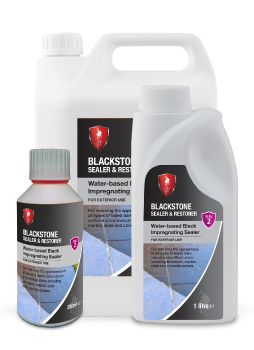
How to apply LTP Blackstone Sealer & Restorer
Before application, test the solution on a small area to help establish the best method and number of coats needed. Ideally, apply in temperatures between 5-25°c. Do not walk on treated surfaces until the treatment has completely dried and wear gloves during application. Shake bottle before use.
- Apply the Restorer on clean, dry slabs, working in manageable areas; apply a small amount of neat solution and spread it out evenly using a sealant applicator, foam roller or paint brush. Allow the solution to penetrate the paver. If a second coat is required, apply it immediately after the first coat has absorbed; do not allow the first coat to fully dry before application.
- Don’t walk on the surface for at least four hours after final application. Once dry, it may be necessary to work off any visible excess using a dry towel.
- Allow newly treated surfaces to cure for 24 hours. You can check that pavers are colourfast by gently rubbing the surface in a few areas with a white cloth or kitchen towel.
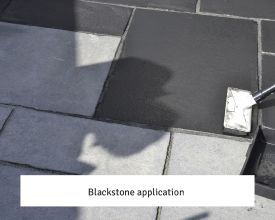
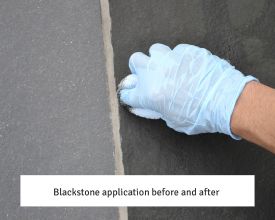
When you come to apply the sealer, don’t be tempted to over-apply in order to achieve a darker finish or speed the process up. Less is more. It’s far better to apply a couple of thin layers than one thick layer. If you apply too much product in one go it won’t be absorbed properly and the finish will be patchy. A dilute 1:10 solution of LTP Power Stripper can be used to remove excess sealer if required.
Note. Pets and children should be kept away from areas to be treated during application and until pavers are dry and the treatment is fully absorbed. If the solution comes into contact with grass and plants, wash off with water once the pavers are dry.
To find out more about protection and maintenance, please visit https://www.ltp-online.co.uk or contact the LTP team on tel. 01823 666213 and email [email protected]. Also, for online help on-the-go, visit LTP TV on YouTube and Product Selector at https://ltp-productguide.co.uk
ends –
For media information and photography, please contact Angela Fitzhugh PR Ltd on tel. (01579) 673026 or email [email protected]


