
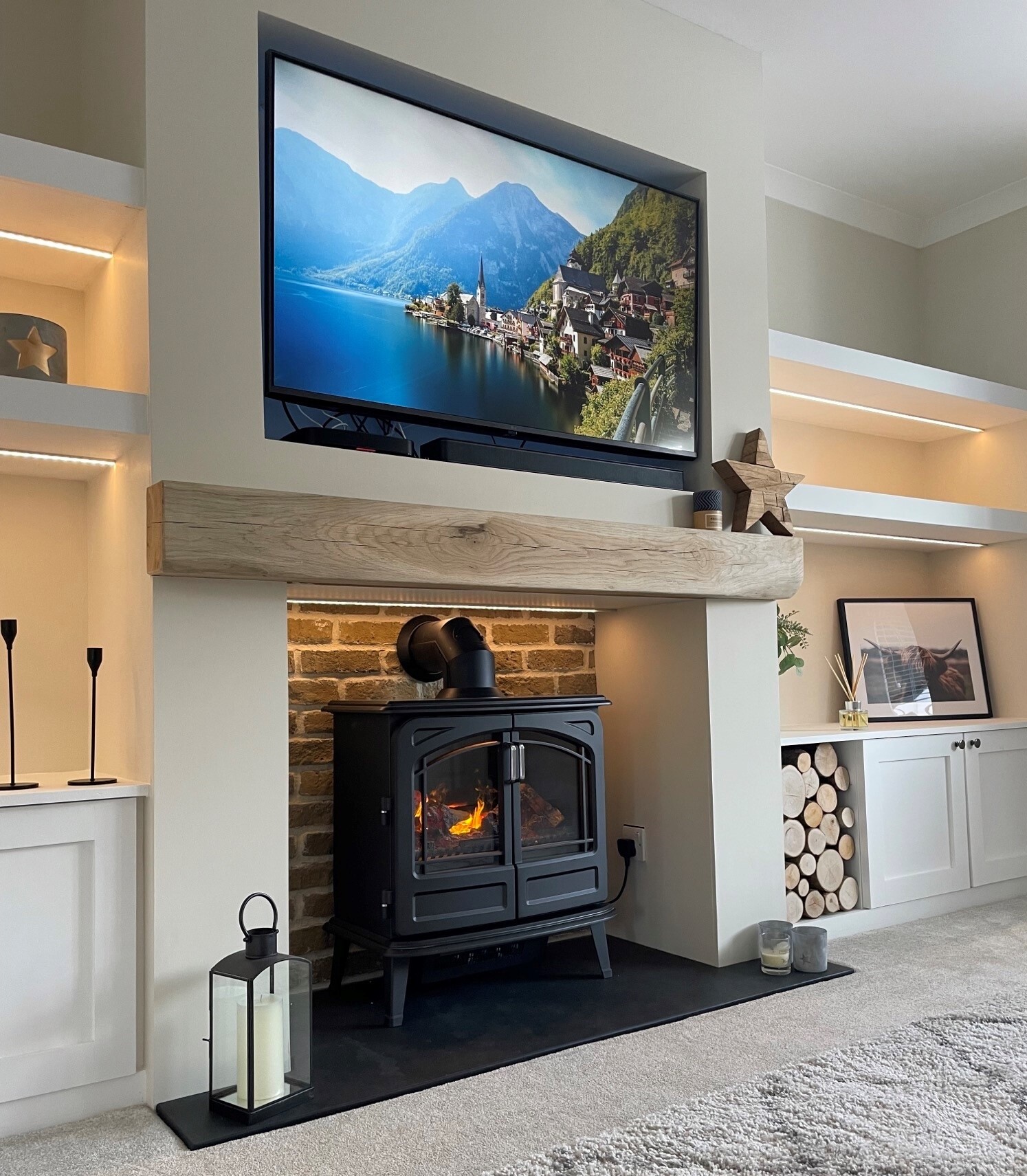
Image kindly supplied by https://ardosiaslate.co.uk/
As the evenings gradually grow lighter, it’s an ideal time to begin planning for spring cleaning. Larger tasks are often best addressed before the gardening season gets underway, and cleaning a fireplace hearth is one such job that can benefit from early attention.
There’s a wealth of information online, sharing tops tips on the best methods and solutions to use but, in the case of natural stone, this advice is often incorrect. A quick search on ‘how to clean a stone hearth’ throws up lots of advice centred around using washing-up liquid for mild stains and a mix of baking soda and detergent for a deep clean. This isn’t, however, the best route to take.
Natural stone is primarily acid-sensitive but it can be sensitive to alkaline substances too. Washing up liquid, despite being supposedly “kind to hands” isn’t mild in terms of natural surfaces. It’s often mildly alkaline and will compromise any protection applied and will leave a residue. Baking soda is also a weak alkaline compound; it can dull and discolour a stone surface and remove any applied protection, making the stone vulnerable to staining.
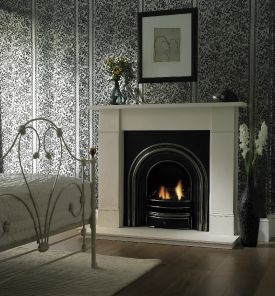
Image kindly supplied by https://www.acquisitions.co.uk/
Specialist deep cleaners for stone, like LTP Grimex, are also alkaline but are fit for purpose and specially formulated to clean safely. The formulation for Grimex was, infact, originally developed over 40 years ago and the solution used today is exactly the same.
How to deep clean with LTP Grimex
LTP Grimex intensive cleaner will safely and effectively remove most stains from a stone hearth, including organic residue, grease and black soot marks and it can be used at different dilutions, depending on the severity of the staining.
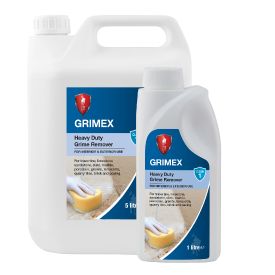
For mild stains, use a 1:5 dilution, apply the cleaner with a cloth or mop and then rinse with clean water.
For more severe staining, use a 1:3 dilution, agitate the solution with a scrubbing brush, leave for 5-10 minutes – keeping the stone wet with additional solution – and agitate again, before rinsing with clean water. LTP Grimex can also be applied neat in severe cases.
Removing other types of stains
Stubborn rust and wax residue is also a common issue. Rust stains are often caused by tiny deposits of iron that come off fireplace tools, like pokers, and wax residue from candles.
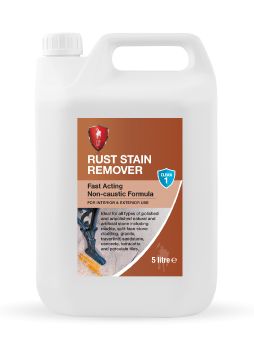
To remove rust, we recommend LTP Rust Stain Remover – a non-caustic solution that’s safe to use on all surfaces. First, wash the hearth with a 1:10 diluted solution of LTP Grimex. Then, cover the stain with undiluted LTP Rust Stain Remover and leave it to act for 15 minutes. The product colour will change to a deep purple as it reacts with the rust. Then, remove the residue and rinse with clean water. Repeat application until the stain is completely removed.
For stubborn candle wax residue, we recommend LTP Solvex – a non-caustic remover suitable for all surfaces. Here, apply the solution neat and generously dab onto the stain with a cloth or brush. Work the solution in manageable areas – as far as you can reach without treading into the cleaner. Leave it to react for up to 30 minutes, applying more solution if it starts to dry out. Using a coarse, stiff brush or an LTP Black Emulsifying Pad, lift the softened residue from the stone. Repeat if any staining remains. Lastly, rinse with LTP Grimex, using a 1:3 dilution applied with a cloth, mop or brush, and then give the hearth a final rinse.
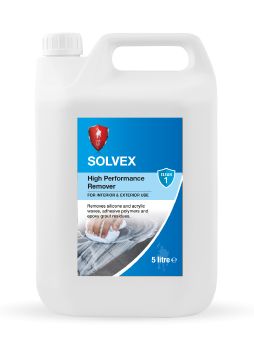
TOP TIP! For particularly thick candle wax build up, cover the residue with blotting paper and then apply a warm iron to melt the wax. This will take it away from the surface and eliminate the need for scrapping which could damage the stone. Once removed, apply LTP Solvex as directed above and clean the hearth with LTP Grimex.
Topping up protection & refreshing appearance
If the surface sealer on your hearth is worn or quite old, or a black stone surface has faded, it’s a good time to apply a new coat of sealer or restorer. This can be carried out once the surface is sufficiently dry; this may take a minimum of 24 hours.
For natural stone, we recommend LTP Stone Oil, an oil-based impregnating sealer and, for black stone, LTP Blackstone Sealer & Restorer. For ongoing maintenance, use a pH neutral cleaner like LTP Stonewash.
For further information, please contact LTP on tel. 01823 666213 or email [email protected]. Also, for online help on-the-go, visit LTP TV on YouTube and Product Selector at https://ltp-productguide.co.uk


