
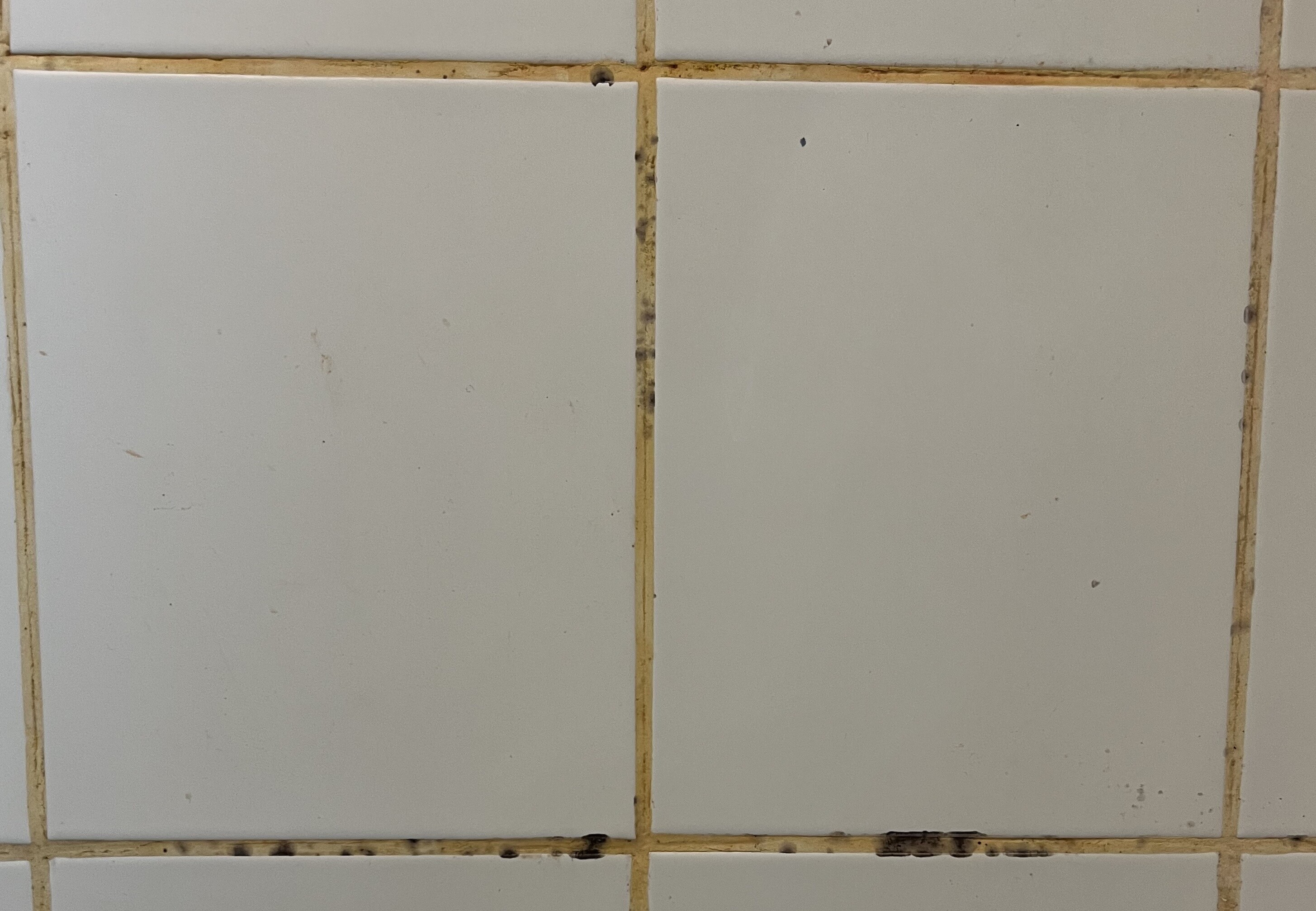
During colder months, we tend to air rooms less often in order to keep the heat in – and the bills down! As a result, our homes can become quite humid and, in damp and steamy areas, black mildew and orange stains can quickly develop.
What is mildew?
Mildew is a type of microscopic fungus that spreads through the air as tiny spores. Once these spores drop in moist or humid areas, they begin to colonise and multiply. Unlike mould, mildew doesn’t penetrate but tends to gather on flat surfaces like grout lines. When it first develops, it’s white or grey and overtime it becomes darker, causing tell-tale black marks. Mildew isn’t a risk to health but it does look unsightly. It’s most commonly found in bathrooms and kitchens.
What causes orange stains in humid areas?
Orange stains or slime, often found in grout joints and silicone seals, are caused by ‘pink mould’ which is actually an airborne bacteria. Like mildew, the bacterium thrives in damp and moist areas and feeds on mineral and fatty deposits in soap and shampoo residue.
How to remove these stains
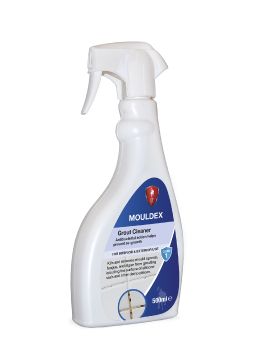
To remove staining from existing grout lines, we recommend LTP Mouldex. Designed to tackle orange and black staining caused by poor ventilation and ineffective cleaning, Mouldex is a trigger spray treatment that has a bleaching action which cleans grout and silicone seals and helps prevent future staining.
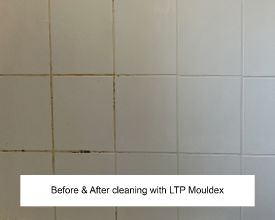
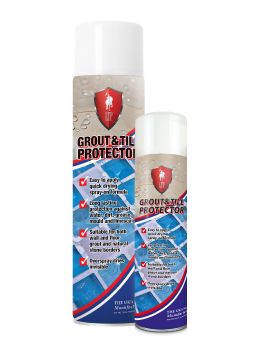
Once treated, grout lines can be protected from future staining with LTP Grout & Tile Protector.
For more advice, you can contact the LTP technical team on 01823 666213 or email [email protected]. To explore LTP’s library of application videos, you can also visit LTP TV on YouTube


